
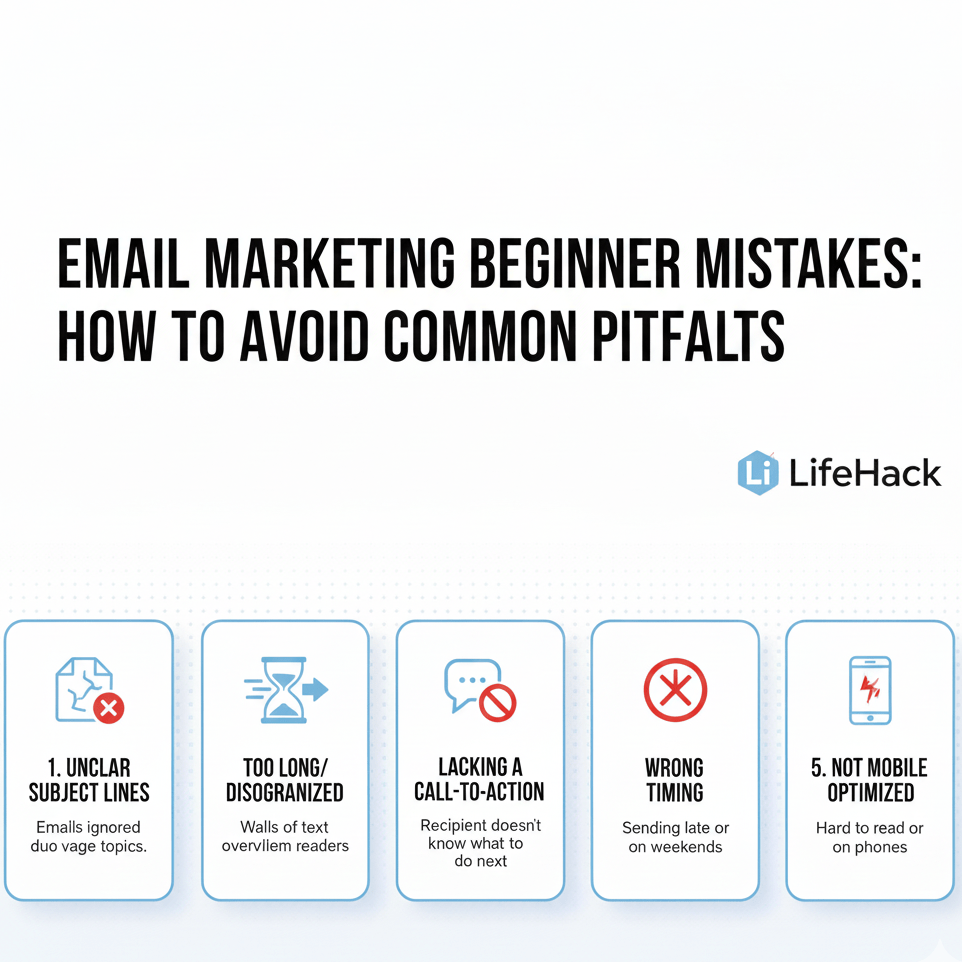
Email marketing remains one of the most effective digital marketing channels. For beginners, it offers the ability to directly reach an audience, nurture leads, and convert subscribers into loyal customers. However, many new marketers unknowingly make errors that reduce effectiveness, damage deliverability, and affect engagement. Understanding email marketing beginner mistakes is crucial for building a successful campaign strategy.
In this guide, we will explore the most common email marketing beginner mistakes, why they happen, and practical tips to avoid them.
1. Not Defining Clear Goals
A frequent mistake in email marketing is sending campaigns without a clear objective. Beginners often focus solely on sending emails rather than asking: “What do I want my email to achieve?”
- Impact: Low engagement, high unsubscribe rates, poor ROI.
- Solution: Define measurable goals for every campaign:
- Drive website traffic
- Increase sales or conversions
- Improve customer retention
- Share educational content
By establishing goals, marketers can craft emails that are relevant and results-driven.
2. Neglecting List Segmentation
Segmentation is the process of dividing your email list into smaller groups based on interests, demographics, or behavior. One of the most common email marketing beginner mistakes is treating the entire subscriber list the same.
- Impact: Generic emails result in low open rates and unsubscribes.
- Solution: Use segmentation to send targeted messages:
- Past purchase behavior
- Engagement with previous campaigns
- Demographics or location
- Stage in the customer journey
Segmented emails consistently perform better, delivering more personalized content to each subscriber.
3. Overlooking Subject Lines and Preview Text
Your subject line is the first thing recipients see. Beginners often underestimate its power or use vague, misleading, or overly promotional language.
- Impact: Emails remain unopened, and click-through rates drop.
- Solution: Craft compelling subject lines:
- Keep them concise (50–60 characters)
- Create curiosity without clickbait
- Include the recipient’s benefit
- Test variations (A/B testing)
The preview text also matters—it provides a sneak peek of the email content and should complement the subject line.
4. Ignoring Mobile Optimization
With the majority of emails opened on mobile devices, ignoring mobile optimization is a critical email marketing beginner mistake.
- Impact: Emails appear broken, content is unreadable, and users delete them.
- Solution:
- Use responsive email templates
- Keep content and images concise
- Ensure buttons and links are easily clickable
- Test emails on multiple devices before sending
Mobile-friendly emails improve user experience and engagement.
5. Sending Emails Too Frequently or Infrequently
Timing is a critical factor in email marketing. Beginners often either spam their subscribers or send emails so rarely that the audience forgets them.
- Impact: High unsubscribe rates, low engagement, poor sender reputation.
- Solution:
- Create a consistent schedule
- Monitor engagement metrics
- Adjust frequency based on subscriber response
- Avoid sending emails during holidays unless relevant
Finding the right balance keeps your audience engaged without overwhelming them.
6. Using Poorly Designed Content
The visual design and content of emails play a major role in conversion. Another common email marketing beginner mistake is sending unappealing or cluttered emails.
- Impact: Recipients ignore or delete emails.
- Solution:
- Use clear headings and concise text
- Include images or GIFs to support content
- Use a single call-to-action per email
- Maintain brand colors and fonts for consistency
A clean, professional design helps convey authority and trustworthiness.
7. Ignoring Analytics and Performance Metrics
Beginners often send emails without tracking performance. Without data, it’s impossible to know what works or what needs improvement.
- Impact: Campaigns remain ineffective, and resources are wasted.
- Solution: Track key metrics:
- Open rates
- Click-through rates
- Conversion rates
- Bounce rates
- Unsubscribes
Analyzing results allows marketers to refine subject lines, content, timing, and segmentation for better outcomes.
8. Not Personalizing Emails
Personalization is more than adding the recipient’s name. Lack of personalization is a common email marketing beginner mistake.
- Impact: Generic emails feel irrelevant, decreasing engagement.
- Solution:
- Use dynamic content based on user behavior
- Send recommendations or offers based on past actions
- Acknowledge milestones like birthdays or anniversaries
Personalized emails improve open rates and conversions.
9. Violating Legal Regulations
Compliance is essential in email marketing. Beginners sometimes overlook regulations like CAN-SPAM, GDPR, or local email laws.
- Impact: Legal penalties, blocked domains, or damaged brand reputation.
- Solution:
- Include an unsubscribe option in every email
- Use verified opt-in methods
- Avoid buying email lists
- Store subscriber data securely
Following legal requirements builds trust with subscribers.
10. Failing to Test Emails Before Sending
Testing is often skipped by beginners. Sending untested emails can result in broken links, formatting issues, or missing images.
- Impact: Low engagement and potential brand damage.
- Solution:
- Send test emails to multiple devices and email clients
- Check all links, images, and formatting
- Use tools that preview emails for different platforms
Testing ensures your emails appear professional and function correctly.
Conclusion
Avoiding email marketing beginner mistakes is essential to building effective campaigns that engage, convert, and retain subscribers. From defining clear goals and segmenting lists to personalizing content, tracking metrics, and ensuring legal compliance, each step matters. By implementing these strategies, beginners can overcome common pitfalls and create email marketing campaigns that are professional, effective, and trustworthy.
Email marketing, when executed correctly, remains one of the most powerful tools in digital marketing. Awareness of these mistakes is the first step toward creating campaigns that deliver results and foster long-term relationships with your audience.